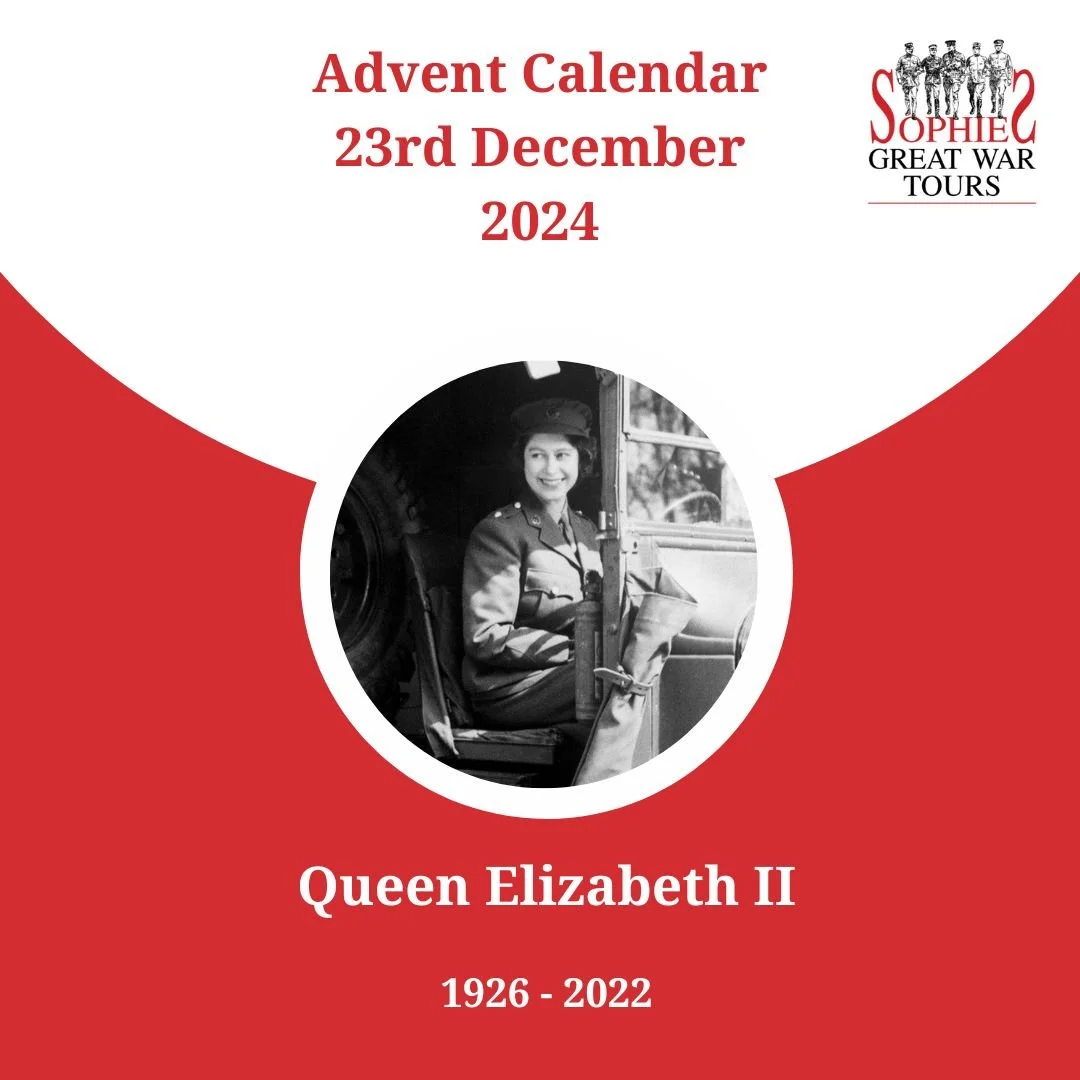
SGWT Advent Calendar: 3rd December 2025

Writing to his young daughter, Pte Edward Stanley offered a promise shaped by the English countryside they both knew:

“When the birds return to the hedgerows, I’ll be there too.”

It is a line full of gentleness, a father trying to reassure a child that the seasons would turn & he would come home with them.

His letter survives. He did not.

I think of Edward, of that unfinished promise & the countless families who waited for someone who never stepped off the train. This Advent, as we share a new snippet of a letter each day, sharing the voices that remind us of the human cost behind every name etched in stone.

SGWT Advent Calendar: 2nd December 2025

Soldiers letters often spoke of the longing for normal life, things we take for granted today.

In 1915, writing to his fiancée, Private Percy O’Brien of the Leicester Regiment captured this perfectly in a single line:

“When I come home, the first thing I want is a bath.

The second is you.”

It’s the perfect mix of humour and honesty.

This Advent, we’re opening one letter each day, revealing the voices that rarely make the history books but tell us the most about the human experience of war.

SGWT Advent Calendar: 1st December 2025

Soldiers’ letters home in the First World War share a familiar rhythm: a blend of reassurance, understatement, and the quiet details of daily life.

With letters censored, what survived on the page was often the monotony of trench routine and the instinct to protect loved ones from the truth.

One line captures this perfectly. Writing to his mother from the Western Front, Private George Coppard tried to lift her worries with a flash of humour:

“Mother, don’t worry, the rats don’t bite often.”

This December, we’ll be sharing 24 snippets of letters home, written by those serving from the First World War to modern conflict.

You'll see the written word full of courage, love, humour and hope.

Follow along as we open a new window every day.

SGWT Advent Calendar 2025

Every December, Sophie’s Great War Tours opens a little window into the past. Three years ago, we started a simple idea: an Advent calendar for history lovers, 24 days of daily posts that honour the people, places, and objects that shaped the world we live in.

In 2022, we focused on military objects. From trench art to gas masks, each post revealed how much a single object can say about a life lived at the front.

In 2023, we turned to specific battlefield sites, exploring the landscapes that still hold the imprint of history, the quiet ridges, forest edges, mine craters, and shattered towns where extraordinary moments unfolded.

Last year we looked at the stories of unsung heroes whose stories deserved to be told.

Every year has been different but each December has reminded us of the same truth: history becomes real when we connect with the people who lived it.

This Year’s Theme: Letters From the Front

For 2025, we’ll be sharing snippets from letters of those that served in conflicts throughout the 20th Century. Some are hopeful, some are heartbreaking, some are unexpectedly funny, warm, or wonderfully ordinary. All of them are human.

These letters are windows into courage, boredom, fear, love, frustration, humour, and hope. They remind us that behind every uniform, every medal, and every battlefield, there was a voice and someone waiting at home to hear it.

If you’re someone who cares deeply about history, remembrance, and the personal stories that bring the past to life, this year’s calendar is for you.

Join Us This December

Follow along on our social channels from 1st December as we open each envelope, unfold each page, and bring a new voice from the past into the present.

More Than a Tour Company: The Heart of Sophie’s Great War Tours

When I first started Sophie’s Great War Tours, I imagined we would simply be a travel company, organising journeys to the First World War battlefields and sharing the history with care. My aim was to tell the stories accurately and sensitively, honouring the men and women who gave their everything.

But very quickly, I realised we were becoming something far deeper.

Again and again, families arrived with a name… a photograph… a fragment of a story passed down through generations. And what they left with was connection. Understanding. A sense of belonging to their own history.

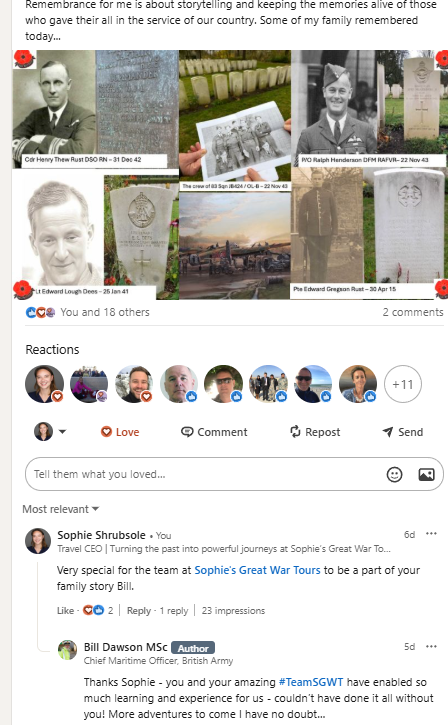
One recent journey reminded me exactly why we do what we do. Bill and his family joined us to follow in the footsteps of their relatives remembered on the Western Front. What began as a tour became days of reflection, discovery, and storytelling piecing together lives lived, choices made, and legacies carried forward.

It wasn’t just history; it was family time. It was remembrance made personal.

That’s what Sophie’s Great War Tours is today. Yes, we guide people across the battlefields of the First and Second World Wars. Yes, we bring the history to life with research, expertise, and care.

But more than anything, we help people find their story.

We help families stand where their relatives once stood. We help them understand service, sacrifice, and love in a new way.
And we give them space to remember, not just the war, but the people.

The tours have grown into something I never expected, yet exactly what I hoped for: a place where history meets heart.

If you’d like to explore your own family story or simply walk the battlefields with an experienced guide and a listening ear I’d love to help you begin that journey.

15th September - Battle of Britain Day

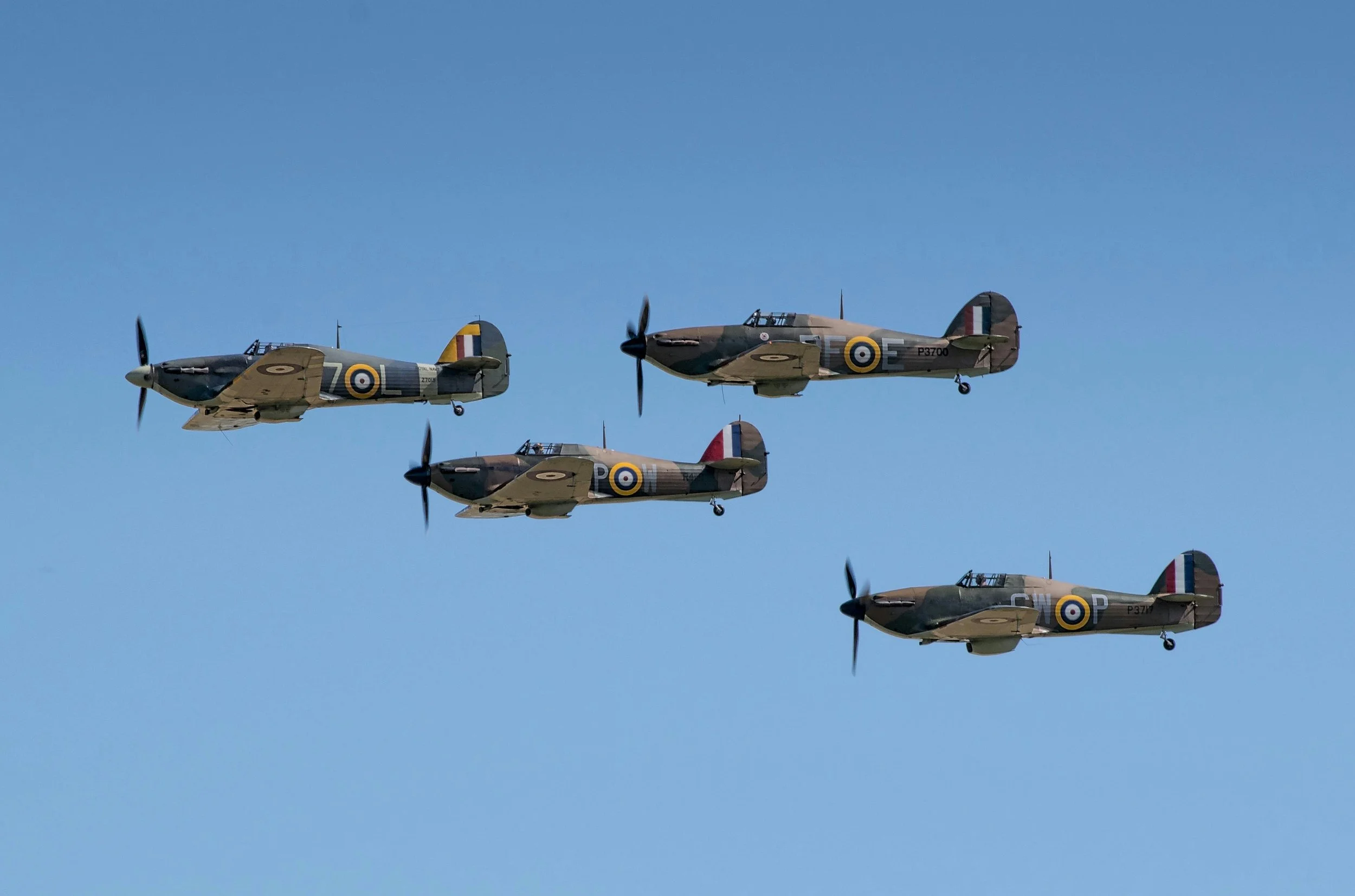
On 15th September 1940, the skies over southern England became the stage for one of the most decisive days in modern military history. Known as Battle of Britain Day, it was the culmination of months of relentless aerial combat between ‘The Few’ as they would be later known (fewer than 3,000 Allied airmen serving from July - October 1940) against far superior numbers of the Luftwaffe.

By September, the Luftwaffe had already launched sustained attacks aimed first at RAF Fighter Command’s airfields, radar stations and aircraft production sites, before shifting towards London and other major cities in the Blitz. Yet 15th September was different: it was the day Hermann Göring ordered a massive, concentrated assault on the capital, intended to draw out the RAF for destruction. Instead, it became the moment the RAF proved not only its resilience, but its mastery of air defence.

The Luftwaffe sent two major waves of attacks, more than 1,500 aircraft in total across the day. Early in the morning, radar stations picked up large formations crossing the Channel. What followed was the full mobilisation of RAF Fighter Command, with Air Vice-Marshal Keith Park directing No. 11 Group from Uxbridge. The pressure on his pilots was immense; many had already endured weeks of near-constant sorties.

The RAF launched 17 squadrons in response to the first wave alone. Fierce dogfights erupted across the skies above Kent, Surrey, and the approaches to London. Spitfires tangled with Bf 109s, while Hurricanes targeted the bombers.

By afternoon, a second, even larger wave approached. Once again, the RAF rose to meet it. Churchill himself visited Uxbridge’s operations room that day, observing the unfolding battle. His presence gave rise to his later words that “Never in the field of human conflict was so much owed by so many to so few.”

By evening, it was clear the Luftwaffe had failed to land a decisive blow. The Germans lost 58 aircraft, compared with the RAF’s 29. While both sides had endured heavy losses throughout the summer, this day was symbolic: the Luftwaffe had tested British defences at full force and been repelled.

This turning point undermined Hitler’s confidence in Operation Sea Lion, the planned invasion of Britain. Without air superiority, any attempt to cross the Channel was impossible. In the months to come, the Blitz would intensify, but Britain had won the first strategic battle fought entirely in the air.

For historians, 15 September illustrates more than just tactical brilliance. It was a triumph of integrated defence: radar technology, the Dowding System of command and control, the courage of young pilots, and the resilience of civilian ground crews all played their part. The day crystallises the larger truth of the Battle of Britain that victory came not from any single factor, but from a collective defence system that worked under extreme pressure.

Today, Battle of Britain Day is commemorated as a moment of national endurance and innovation. For those of us who walk the airfields, visit the preserved operations rooms, or stand beneath the white cliffs of Dover, it remains a reminder of what was at stake in 1940: the survival of Britain against the might of Nazi Germany who had not yet suffered a blow.

1st September 1939 - Nazi Invasion of Poland

On this day in 1939, Nazi Germany invaded Poland, triggering the beginning of the Second World War. The occupation was devastating in every way with around 17% of the population losing their lives.

The Warsaw Ghetto was established in 1940 and at its peak, 400,000 Jews were imprisoned there under horrific conditions. Four years later, another 200,000 civilians would be killed trying to liberate their city.

Around 85% of the city was totally destroyed, those scenes at the end of The Pianist for example, linger in my mind.

Today Warsaw is a fascinating mix of Gothic spires, communist-era blocks, and sleek modern skyscrapers. Whether you’re drawn to its poignant history, vibrant food scene, or welcoming accommodations, Poland’s capital offers something for every traveler.

What to See and Do in Warsaw

Old Town: Warsaw’s Old Town, a UNESCO World Heritage Site, is a testament to determination. Reconstructed after the war with painstaking attention to detail, it feels like stepping into a fairy tale. Wander the cobblestone streets, admire the colorful facades, and don’t miss the Royal Castle.

POLIN Museum of the History of Polish Jews: Modern and thought-provoking, this museum is one of Warsaw’s most important cultural institutions. It chronicles 1,000 years of Jewish life in Poland, offering powerful stories and interactive exhibits.

Warsaw Uprising Museum: For a deeper understanding of Warsaw’s spirit, the Uprising Museum is a must. It tells the story of the 1944 resistance against Nazi occupation, blending artifacts, film, and immersive installations.

Ghetto Walls: See remaining fragments of the ghetto wall and on the ground, see where the ghetto once stood.

Where to Eat in Warsaw

Warsaw’s culinary scene is as diverse as its history, traditional Polish comfort food meets global influences.

  • Zapiecek: A local favorite for hearty pierogi (dumplings) and classic Polish fare.

  • Specjały Regionalne: A rustic spot serving traditional dishes like bigos (hunter’s stew) and potato pancakes.

  • Hala Koszyki: A renovated food hall where you can sample everything from sushi to modern Polish tapas, all under one roof.

  • Stary Dom: Elegant and timeless, this restaurant serves refined Polish cuisine in a historic setting.

Where to Stay in Warsaw

Hotel Bristol: Historic elegance, survived the war, steps from the Royal Route.

Why Travellers Love Warsaw

“the city breaths historym you can feel it in every street, but, the vibrancy of modern life is there to be enjoyed and celebrated”.

Visit Warsaw

23rd August 1914 - Battle of Mons

After the declaration of war, the British Expeditionary Force mobalised for Europe to face the oncoming German Army. They would meet and engage for the first time around the little Belgium town of Mons.

Vastly outnumbered, the British forces fought with determination along the banks of the Mons-Conde Canal. Their resistance was fierce, holding back the Germans for a crucial day, but ultimately, the weight of numbers forced a retreat. Here is a brief overview of how the 23rd August played out for both sides.

Early Morning: Deployment and First Contact

  • The BEF’s II Corps, commanded by General Sir Horace Smith-Dorrien, held a 20-mile defensive line along the Mons–Condé Canal. The British forces, numbering around 70,000 men, were stretched thin against the 160,000 German troops advancing south. The first German probes began at dawn, with cavalry and infantry patrols testing British positions. Skirmishes flared near Obourg, Nimy, and Mariette bridges.

Late Morning: The Opening Engagements

  • At Nimy Bridge, the 4th Battalion Royal Fusiliers under Captain Ashburner faced repeated attacks. The defence was so tenacious that two Victoria Crosses were later awarded here to Lieutenant Maurice Dease and Private Sidney Godley for manning machine-guns under devastating fire. To the east at Obourg, the Royal Irish Regiment repelled waves of German infantry. Accounts describe how disciplined British rifle fire – the famed “mad minute,” capable of 15 aimed rounds per soldier per minute, inflicted heavy casualties. German soldiers initially believed they were under sustained machine-gun fire.

Early Afternoon: Pressure Mounts

  • By midday, German artillery was brought forward, subjecting British positions to increasingly heavy shellfire. The 3rd Division was hammered by assaults along the canal, particularly at St. Ghislain and Mariette, where bridges became focal points of desperate fighting. Despite being outnumbered, the BEF inflicted severe losses on the Germans. However, the weight of numbers and artillery superiority began to tell.

Mid-Afternoon: The German Push

  • Around 3 p.m., German troops forced crossings east of Mons, threatening to outflank the defenders. Fierce fighting at Nimy and Obourg gradually overwhelmed British defenders, with units withdrawing only after sustaining heavy casualties. Communication difficulties meant that some units held on longer than intended, suffering almost to annihilation.

Evening: The Order to Retreat

  • By 5 p.m., with German forces pressing across the canal and the French Fifth Army withdrawing on the BEF’s right flank, Field Marshal French ordered a general retreat. The withdrawal was conducted under fire, with rear-guard actions fought by exhausted units. The British pulled back in good order, but the battle had cost over 1,600 British casualties in a single day. German losses were far heavier, with some estimates exceeding 5,000.

Legacy of the 23rd August 1914

The stand at Mons demonstrated the professionalism of the pre-war British Army. Though forced to retreat, the BEF had inflicted disproportionate casualties on the German army and bought valuable time for the Allies. However, it became obvious to many very quickly, that war would not be over by Christmas, not with the numbers of men involved and the technology of the day.

What Can I see in Mons Today?

Your expert guide can weave together pertinent locations that allow you to imagine the fierce actions of resistance, followed by the fighting retreat. Here are some must see stops:

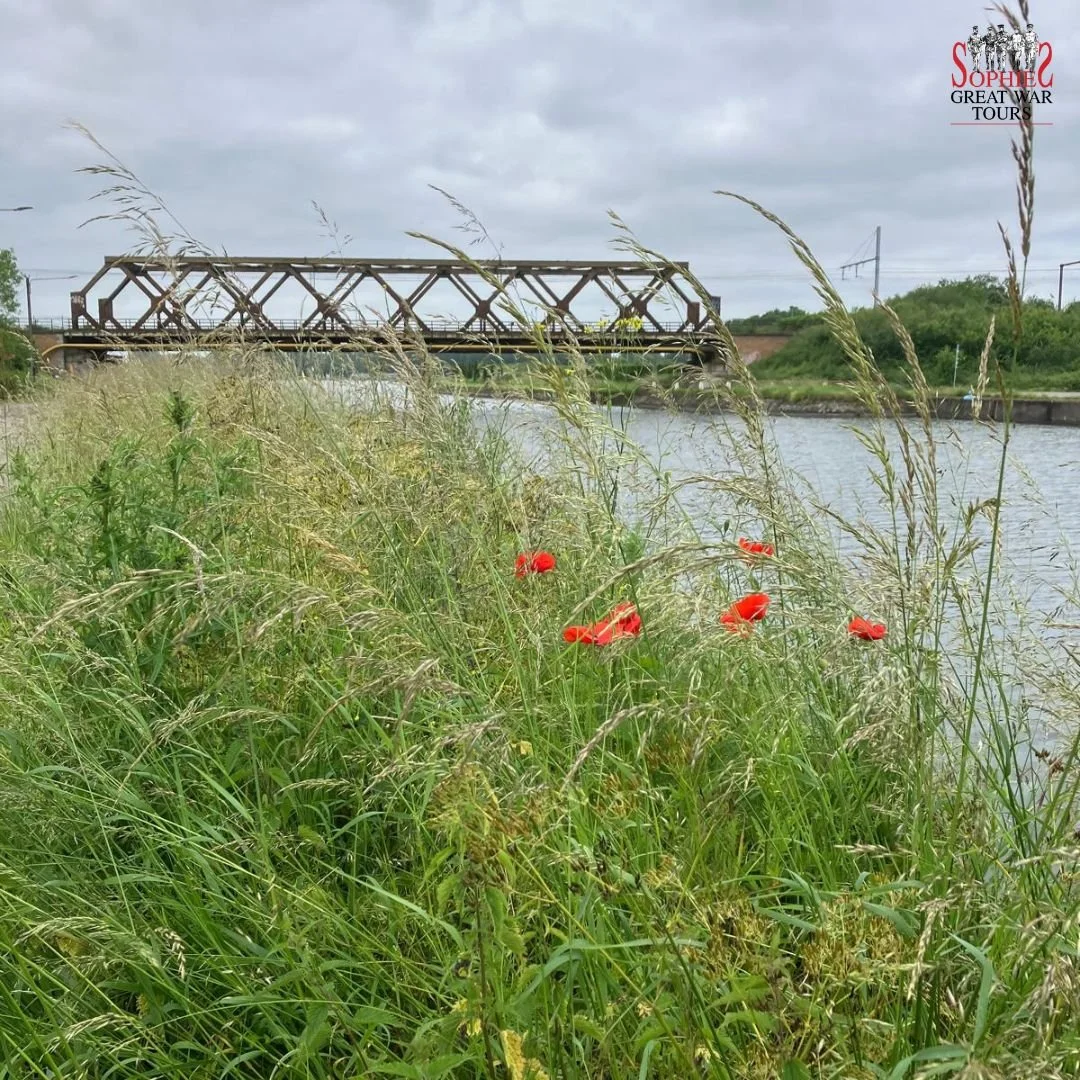
Nimy Bridge - Standing on the bridge, visitors can picture these desperate hours, where a handful of men held back overwhelming German numbers.

Nimy Bridge Mons

Nimy Bridge Mons

St. Symphorien Military Cemetery - Tucked away on the outskirts of Mons, St. Symphorien Military Cemetery is often described as one of the most beautiful and thought-provoking cemeteries of the First World War.

Spend time at the grave of Lieutenant Maurice James Dease VC. Dease commanded a machine-gun section at the Nimy Railway Bridge. As the German army pressed hard against the British line, Dease and his men came under intense fire. Despite being repeatedly wounded, Dease stayed at his post, directing and operating the machine gun to hold back the German advance and cover the retreat of his men. He refused to leave his position until he physically could no longer continue. Even then, he insisted on making sure the gun was still in action before finally collapsing. Dease died later of his wounds. Dease’s actions that day earned him the Victoria Cross, the first to be awarded in the Great War.

Here lie Private John Parr, the first British soldier killed in action in August 1914, and Private George Edwin Ellison, the last British soldier killed in action on 11th November 1918. Their graves are just metres apart, create a powerful symmetry that makes this cemetery unique in the world.

British and German soldiers are buried here. For visitors, this offers a moving reminder that sacrifice was shared, no matter the uniform.

Regular visitors to Commonwealth War Graves cemeteries will be struck at how different the design is here. It is landscaped with mounds, mounds, trees, and curved pathways, giving it more a secret garden feel, discovering new soldier stories at each turn.

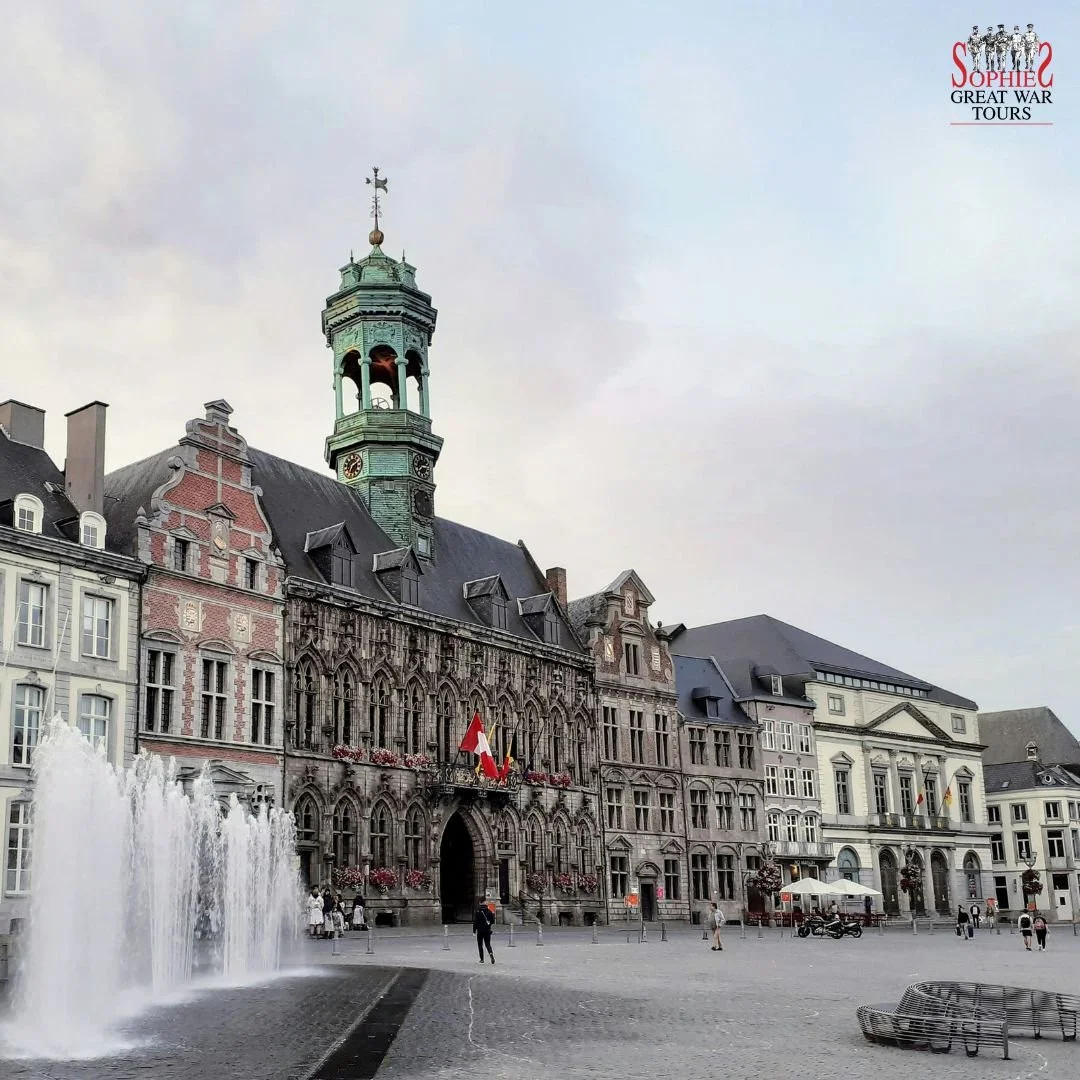
Mons Grand Place

The Grand Place of Mons - fighting took place in the town itself in both 1914, but also in 1918 when the Canadians fought into the town, liberating it on 11th November. The Grand Place is a charming centre and offers a wonderful lunch stop for hungry battlefield tourists.

Visit Mons

At Sophie’s Great War Tours, we believe history is best experienced where it happened. Our tours are designed for history lovers who want more than just dates and names, we bring the stories of Mons to life, combining detailed knowledge with a sincere appreciation of the past.

Get in touch with Sophie’s Great War Tours today to begin planning your visit to the Mons battlefields. Together, we’ll turn history into an unforgettable journey.

Contact Us

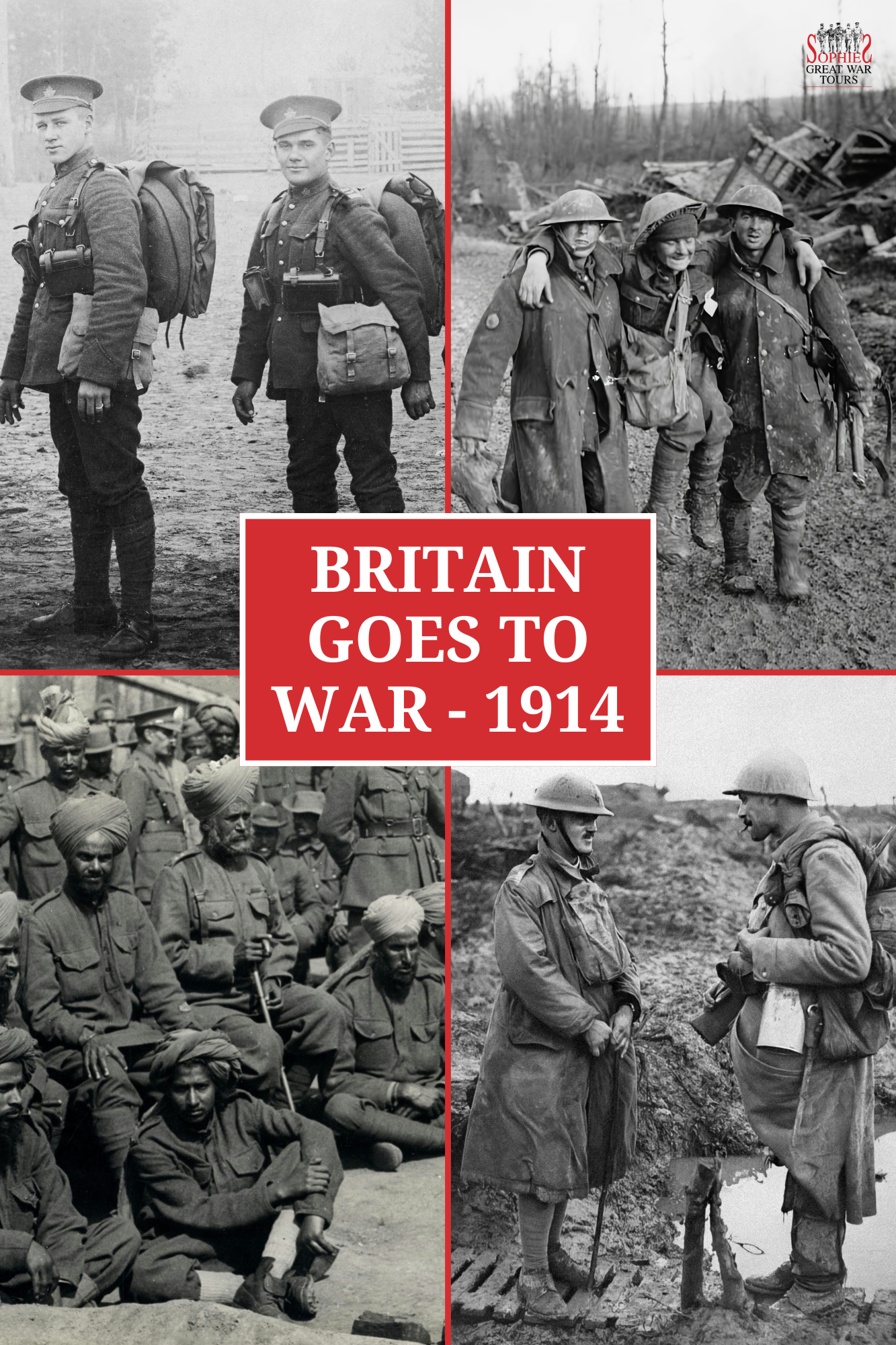
Britain Goes to War - 1914

On this day in 1914, Britain declares war on Germany.

What began as a European crisis quickly became a global catastrophe. Over the next four years, more than 16 million people would be killed, including almost a million from Britain and her empire. The war would reshape borders and see nations disappear but it would also sow the seeds for another global conflict.

More than a century on, those men and women who were shaken from their ordinary lives and asked to do the unimaginable, deserve to be remembered. That’s where Sophie’s Great War Tours comes in. Their story, our history is shared on the battlefields where it happened. Our tours take you to the fields of Flanders, the trenches of the Somme, and the towns forever marked by war. We walk the ground where young men once stood. We tell their stories, not just of how they died, but how they lived, hoped, wrote home, laughed with comrades, and faced unimaginable fear.

When you walk with us, you honour those who gave everything. You connect the past with the present. And you carry their memory into the future.

Contact us today to discuss your very own battlefield tour.

Contact Us

Virtual History

Today one of our passionate guides is taking history beyond the battlefield and into the classroom with a special Zoom lecture on the Battle of the Somme for students.

We’re proud to support schools by bringing the stories, sacrifices, and lessons of the First World War directly to young learners, making the past personal, powerful, and unforgettable.

This is just one of the many ways we bring history to life, whether on-site or online.

If you’d like to draw on our experience in bringing history to life, get in touch today to explore how we can best support your educational goals.

Contact


It's Global Travel Advisor Day!

Let’s recognise the incredible skill, patience, & passion of travel advisors who manage logistics, provide expert insights & keep travelers safe & inspired every step of the way.

Just a quick reminder of how we can support you here at Sophie's Great War Tours:

Trip Planning & Itinerary Creation
Crafting custom travel itineraries tailored to a guests preferences, budget, and needs.

Research & Booking
Researching the best deals across all elemts of travel, be that flights, accommodation or car rental. Staying up-to-date with travel restrictions, visa requirements, and local guidelines.

Problem Solving & Support
Handling cancellations, delays, and rebooking due to weather, strikes, or emergencies.

Building Relationships
Networking with tourism boards, hotels and others to get the best perks and upgrades for our guests. We have money can't buy exlusive access on a range of accommodations and excursions.

In short, we travel advisors are planners, negotiators, problem-solvers, researchers, and trusted guides, all rolled into one.

So don't be shy, come and ask us for help, it's rarely a first for us!

Here's a pic of some of my favourite travel advisors♥️

Travel to Thailand with Sophie’s Great war Tours

Visiting Thailand has long been a dream of mine, and I finally got to fullfil that in March 2024.

When most people think of Thailand, images of turquoise waters, golden temples, and vibrant night markets instantly come to mind. It’s a country that promises postcard-perfect beaches, mouthwatering cuisine, and a deep sense of spirituality. But beyond the stunning scenery and lively culture, Thailand also holds powerful stories from its complex past, none more haunting than the infamous Burma Railway of the Second World War.

Whether you’re seeking relaxation, adventure, culture, or historical reflection, Thailand offers a travel experience unlike any other. Here’s why Thailand deserves a top spot on your travel bucket list.

1. A Tropical Escape: Beaches, Resorts, and Relaxation

Thailand’s southern coastline is a dreamscape of white sands and crystal-clear waters. One standout destination is Aleenta Phuket, a boutique luxury resort that embodies barefoot elegance and personal service. Whether you’re lounging by your private pool, indulging in a beachfront spa, or enjoying farm-to-table dining, Aleenta is the perfect place to decompress after a long flight, or before embarking on more adventurous travels.

With nearby islands like Phi Phi, Similan, and James Bond Island just a boat ride away, this part of Thailand is a magnet for beach lovers and water sports enthusiasts alike.

Get in touch if you're thinking about your next escape, we have access to some exclusive special offers including complimentary half board.

2. City Lights and Cultural Delights: Bangkok

After some well-earned beach time, many travelers head north to Bangkok, a city where tradition and modernity dance side by side. Here, glittering skyscrapers overlook ancient temples like Wat Arun and the Grand Palace. A boat ride through the Chao Phraya River reveals hidden corners of the old city, while bustling markets offer everything from street food feasts to handmade crafts.

3. A Journey Through History: The Burma Railway

No journey to Thailand is complete without acknowledging the country’s profound Second World War history. Known as the Death Railway, the Burma Railway was built under harrowing conditions by Allied prisoners of war and forced laborers, linking Thailand to Burma (now Myanmar).

Today, you can visit Kanchanaburi, the province where much of the railway was constructed. Walk across the Bridge on the River Kwai, made famous by the novel and movie of the same name, and explore the Hellfire Pass Memorial Museum, a moving tribute to the thousands who lost their lives during the railway’s construction.

It’s a deeply emotional experience, contrasting starkly with the paradise landscapes.

Get in touch today and let our experts plan your trip to this fascinating and welcoming country.

Contact