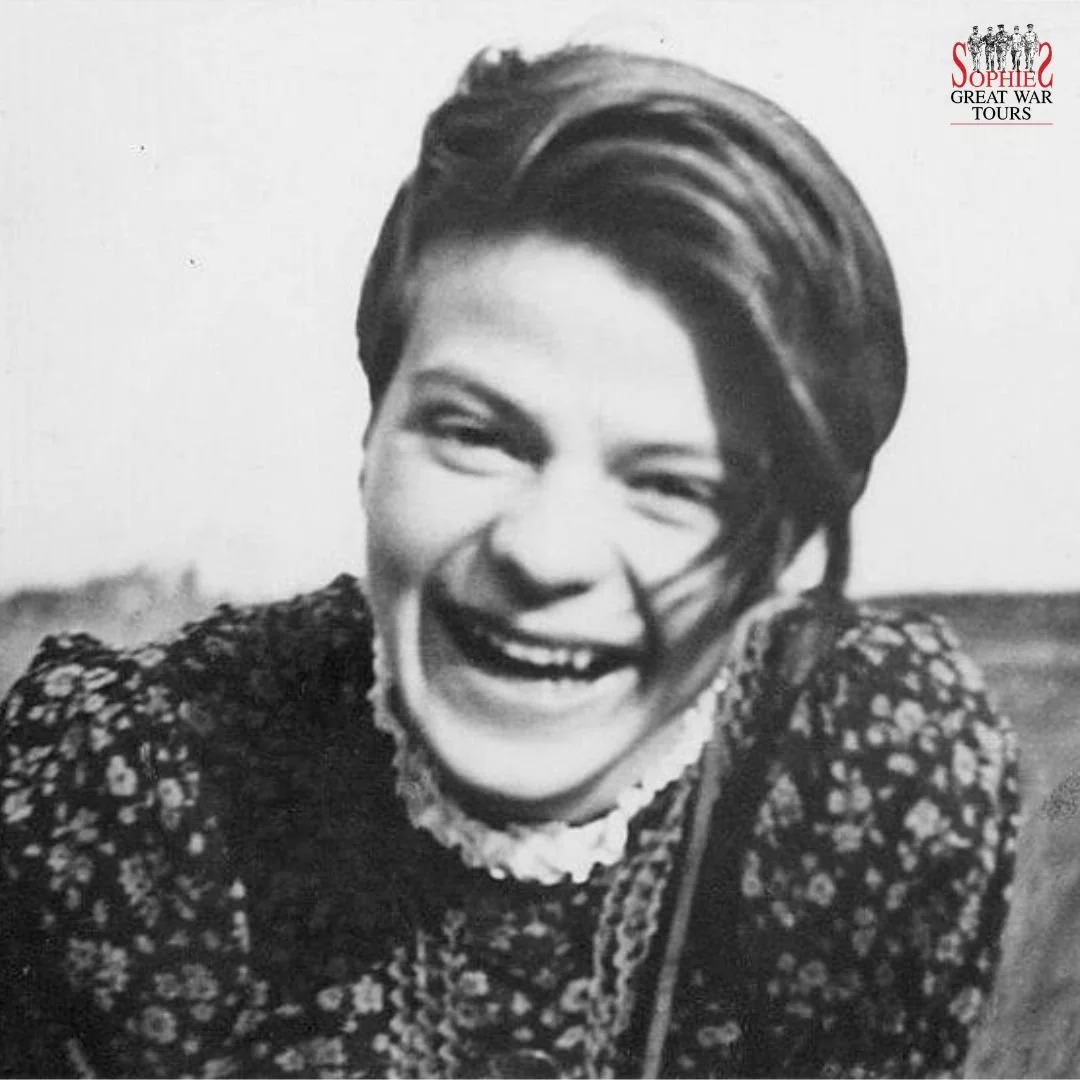
Each International Women's Day makes me think of women whom I find inspiring. Each year I am continuously drawn to Sophie Scholl.
Sophie was born in 1921 in southern Germany. Like many young people in the 1930s, she initially joined the Bund Deutscher Mädel, the girls’ branch of the Hitler Youth. But as she grew older, she began to look beyond the summer youth gatherings and the sense of belonging they offered, and started to question the ideology that lay beneath them.
While studying biology and philosophy at the Ludwig Maximilian University of Munich, Sophie became involved with a small group of students who would later become known as the White Rose. There were just six members of the White Rose group, originally founded by Sophie's brother Hans Scholl and his friend Alexander Schmorell. They were joined by Sophie, Christoph Probst and Willi Graf, and by one of their professors, Kurt Huber.
Between 1942 and early 1943, the group secretly printed and distributed a series of leaflets that condemned the Nazi regime. Their writings called on Germans to resist what they described as a dictatorship built on lies, violence, and moral corruption.
On 18 February 1943, Sophie and Hans carried a suitcase full of leaflets into the university building in Munich. They placed stacks outside lecture halls so that students would find them as classes ended. Just before leaving, Sophie impulsively pushed the remaining leaflets from an upper-floor balcony so they fluttered down into the atrium below.
They were spotted by Jakob Schmid, a university caretaker loyal to the regime and immediately reported to the Gestapo.
After several days of interrogation, Sophie, Hans, and fellow member Christoph Probst were brought before the notorious Roland Freisler at the Volksgerichtshof. The trial lasted only a few hours, a typical Nazi sham show trial.
All three were sentenced to death.
Later that same day, 22 February 1943, Sophie Scholl was executed by guillotine in Stadelheim Prison. She was just 21 years old.
I can never begin to imagine the strength and bravery needed to engage in resistance activities, particularly at such a young age.
Sophie was driven by conviction that standing by and doing nothing, made you complicit. She would not be complicit.
In a world where it can often feel easier to stay silent, Sophie Scholl’s life challenges us to speak up and act.